


Please sign in with Google to view the map.
Sign in with GoogleTarragona Roman Circus & Praetorium – History, Tickets & Hours
Explore Tarragona’s Roman Circus and Praetorium: opening hours, ticket options, history and tips for visiting these major MHT sites within the UNESCO archaeological ensemble of Tarraco
Views:
3.4k
About History of Tarragona Museum Roman Circus & Praetorium
The Roman Circus of Tarraco (Circo Romano de Tarraco) and the Roman Praetorium (Pretorio Romano de Tarraco) are two interconnected archaeological sites forming part of the monumental Roman complex in the heart of Tarragona. Located close to the Roman Amphitheatre, these structures once dominated the provincial capital of Hispania Citerior. During the Middle Ages, the Kings of Aragón adapted parts of the complex for use as a royal palace.
Tarragona Roman Circus History
The Roman circus was one of the most popular entertainment venues in the ancient world, hosting dramatic chariot races pulled by teams of two or four horses. Built at the end of the 1st century A.D. during the reign of Emperor Domitian, the circus formed the lower terrace of Tarraco’s vast provincial complex.
Measuring around 325 metres long and 100–115 metres wide, the circus was constructed on a network of powerful cement vaults. These vaults supported the seating tiers and upper platforms while also serving as internal corridors that allowed spectators to circulate throughout the building—much like a modern stadium. Three sides of the structure held the grandstands, while the fourth contained the starting gates for the racing chariots.
A protective wall over 2 metres high, the podium, separated the arena from the spectators. On the northern side, attached to the provincial forum buildings, stood the pulvinar, a ceremonial viewing box reserved for high‑ranking officials.
One of the short ends of the circus housed the dungeons and starting chambers, with twelve exit gates arranged around a central doorway. Archaeological excavations have identified these structures beneath the modern Tarragona City Council building. This sector, known as the oppidum, also included a tower and a terrace from which the organiser of the games could watch the races. Magistrates overseeing the competition occupied a dedicated tribune (tribunal iudicum).
By the 5th century, the circus had begun to lose its original function. Several of the vaults were repurposed as domestic rooms, marking the start of the site’s gradual transformation during late antiquity.
Tarragona Roman Circus Today
Much of the original arena now lies beneath the historic centre of modern Tarragona. What survives includes a substantial corner of the circus, the main gate area and a series of long underground vaults and corridors that visitors can explore.
Tarragona Roman Praetorium History
Around 73 A.D., under Emperor Vespasian, the Provincial Forum was constructed on the highest part of the city. This administrative complex served as the political and economic centre of the province, governed by the Consilium Provinciae Hispaniae Citerioris (Provincial Council).
The forum occupied a state‑owned area of roughly 7.5 hectares and was organised across two main terraces. The upper terrace housed the imperial cult temple, while the lower terrace contained the vast representation square. A third terrace, built slightly later, accommodated the circus, completing the monumental ensemble.
The representation square contained key administrative spaces such as the tabularium (state archive) and the aerarium (state treasury). Access between the terraces was provided by a series of side towers that functioned as stairwells.
The entire complex was aligned along a grand processional axis running northwest to southeast, linking the temple of the imperial cult with the circus pulvinar. Statues once lined this ceremonial route, though only their pedestals survive today.
The Provincial Forum began to decline in the early 5th century. Administrative functions contracted into smaller, now‑unknown areas, and many of the high‑imperial buildings were gradually dismantled. Their materials were reused in later Roman and medieval constructions throughout Tarraco.
Tarragona Roman Praetorium Today
The main surviving structure is a large tower containing an impressive internal staircase that once connected the different terrace levels of Roman Tarraco. Inside, visitors can see displays of statues, stone coffins and carved architectural fragments. The rooftop terrace offers excellent views over modern Tarragona, the Roman circus and the distant amphitheatre.
Image Gallery For History of Tarragona Museum Roman Circus & Praetorium
Click on any of the 58 images to open full screen gallery player. Note that viewing images is subject to our Fair Use Policy.
Visiting History of Tarragona Museum Roman Circus & Praetorium
The Roman Circus and Praetorium are managed by the Museu d’Història de Tarragona (MHT). The ticket office is located inside the circus building near the roundabout entrance. You can purchase a single‑site ticket or a combined pass that includes all MHT attractions. Reduced prices are available for seniors (65+), students and children. Although the Circus and Praetorium are separate buildings, they are connected internally by a tunnel and staircase, allowing you to move between them with a combined ticket. For details on the MHT combined ticket, see the Tarragona overview page’s #tickets section.
Roman Tarragona Circus & Praetorium Opening Hours
Summer Season: 1 April – 30 September
- Tuesday to Friday: 09:00 – 20:30
- Saturday: 09:00 – 18:30
- Sunday & Public Holidays: 09:00 – 14:30
- Closed: Mondays and 5 April
- Open mornings only: 1 May, 24 June, 19 August, 11 September, 23 September
Winter Season: 1 October – 31 March
- Tuesday to Friday: 09:00 – 19:00
- Saturday: 09:00 – 18:30
- Sunday & Public Holidays: 09:00 – 12:30
- Closed: Mondays, 24–26 December, 31 December, 1 January, 6 January, 1 November
- Open mornings only: 12 October, 6 December, 8 December
Free Entry Days: International Museum Day (May), 19 August, 18 September, 23 September, 8–10 October, and the last Tuesday of January, February, March, May, October, November and December.
Access to the site closes 30 minutes before the official closing time.
Accessibility for the History of Tarragona Museum Roman Circus & Praetorium
Access to the Roman Circus is via a set of steps descending from Rambla Vella. The visitor route continues through the underground vaults and then up another flight of stairs to reach the Praetorium. The Praetorium can also be entered from Plaça del Rei, although this entrance also involves a staircase. Once inside the Praetorium, a lift provides access to all floors, including the rooftop viewpoint. For the most accurate accessibility information, contact the site on 977 242 220 or mht@tarragona.cat.
There are no bicycle anchorage points near the museum entrances.
Large rucksacks and bulky bags are not permitted inside the site, and there is no storage area at reception. I was allowed to enter with my small 10L daypack, but larger backpacks will need to be left elsewhere.
There is no audio guide service at the Circus or Praetorium, but clear information panels throughout the route explain the main structures, archaeological remains and historical context.
Tarragona Roman Circus & Praetorium Summary of Prices
Train/Bus Fare
Entry Ticket
Additional Information
Train/Bus Fare
Entry Ticket
Additional Information
Adult
€ 16.10
€ 3.30
Students, Over 65 years, 1.70 Euros
Child
€ 16.10
FREE
For under 16 Years
Group/Family Ticket?
See Website.
Notes
Combined ticket for all MHT 11.05 Euros.
Getting to History of Tarragona Museum Roman Circus & Praetorium
Address: Rambla Vella 2, Tarragona, 43003
For detailed directions, see the #getting to section of the Tarragona overview page, which explains how to reach Tarragona by train, car or bus.
Map for History of Tarragona Museum Roman Circus & Praetorium
Weather for Tarragona
Where to stay near History of Tarragona Museum Roman Circus and Praetorium
Nearby Attractions to History of Tarragona Museum Roman Circus & Praetorium
 TRAIN + BUS
5.2k views
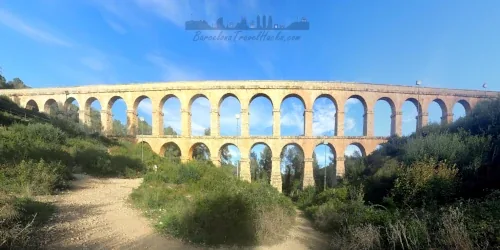
Tarragona Roman Aqueduct – Pont del Diable & Les Ferreres
Explore the Les Ferreres Aqueduct, Tarragona’s Pont del Diable, with a scenic park, viewpoints and a walkable upper channel. Includes access details, transport and tips
Read more >
 TRAIN
TRAIN
5k views
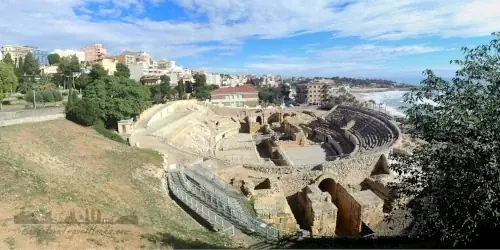
Tarragona Roman Amphitheatre – Tickets, Hours & Top Tips
Discover Tarragona’s 2nd‑century Roman Amphitheatre with opening hours, ticket options and essential tips for visiting this UNESCO site managed by the Museum of History Tarragona
Read more >
 TRAIN
TRAIN
3k views
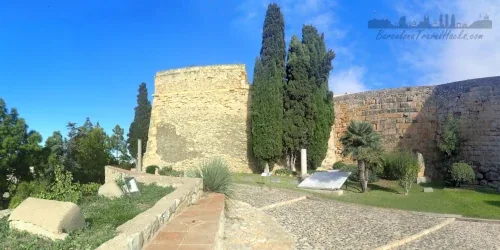
Tarragona Roman Wall & Gardens – Archaeological Walk Guide
Walk Tarragona’s Roman Wall and Gardens: ancient towers, scenic viewpoints, landscaped paths and historic fortifications. Includes opening hours, tickets and visitor tips
Read more >
 TRAIN
TRAIN
3k views
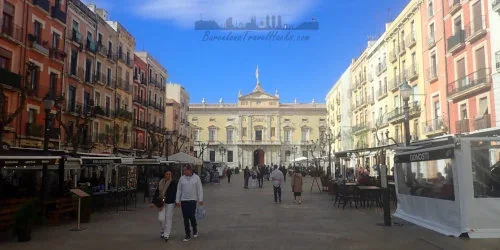
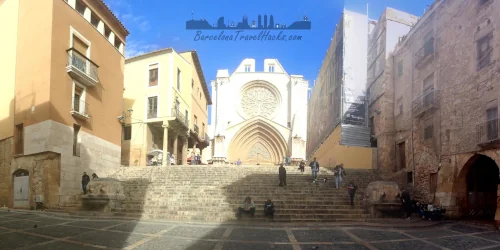
Tarragona Part Alta – Roman & Medieval Historic City Centre Walk
Explore Tarragona’s Part Alta, the Roman and medieval walled historic centre. A walking route through ancient squares, city gates, Jewish quarter streets and cathedral surroundings
Read more >
 TRAIN
TRAIN
2.9k views
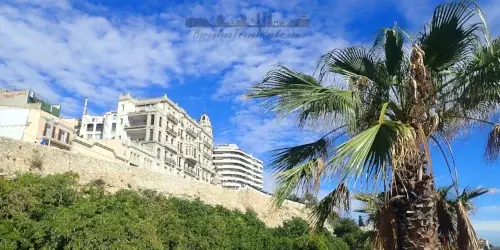
Tarragona Cathedral Guide – Cloister, Museum & Visitor Info
Discover Tarragona Cathedral with access to the cloister, Diocesan Museum, Roman foundations and gardens. Find opening hours, ticket prices and visitor guidance
Read more >
 TRAIN
TRAIN
2.2k views
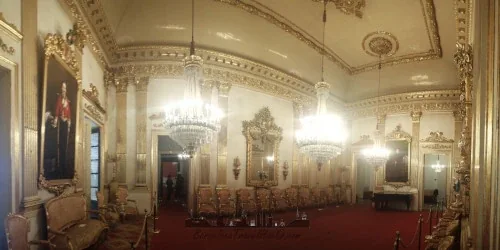
Tarragona Mediterranean Balcony – Sea Views & Historic Promenade
Visit the Balcó del Mediterrani, Tarragona’s iconic viewpoint overlooking the coast, port and Roman Amphitheatre. A scenic Rambla Nova walk with monuments and palm‑lined views
Read more >
 TRAIN
TRAIN
1.8k views
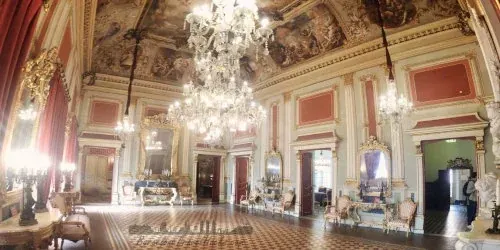
Casa Canals Tarragona – Neoclassical Noble House & MHT Museum
Explore Casa Canals, an 18th‑century neoclassical noble house built into Tarragona’s Roman wall. Visit the grand ballroom, chapel, garden and temporary exhibitions in the Part Alta
Read more >
 TRAIN
TRAIN
1.5k views
Casa Castellarnau Tarragona – Noble House, Ballroom & MHT Museum
Explore Casa Castellarnau, a medieval‑to‑18th‑century noble house on Carrer Cavallers with a neoclassical ballroom, Gothic courtyard and Roman‑wall remains. Part of the MHT museum network
Read more >
 TRAIN
TRAIN
1.5k views